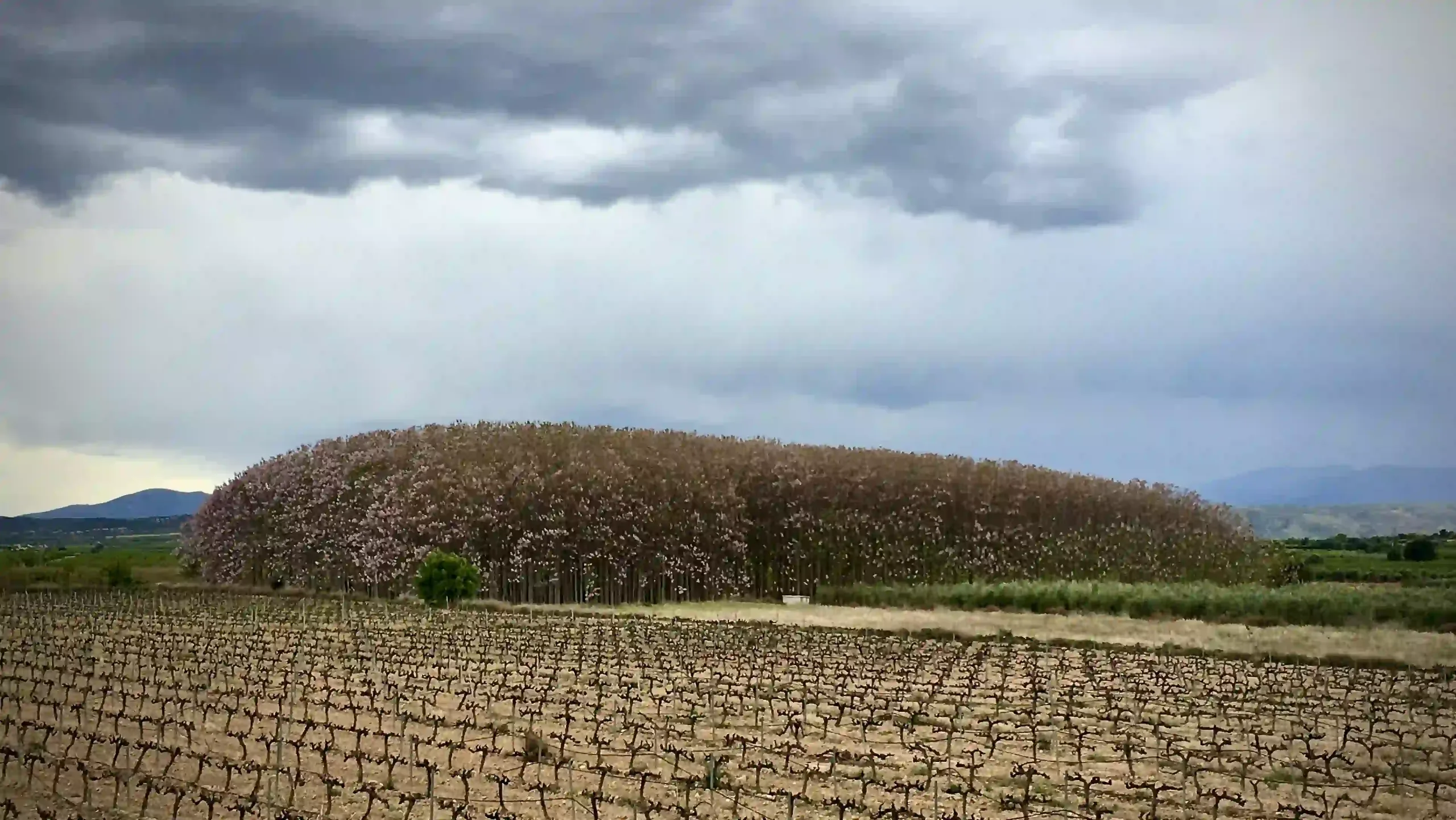
We have been growing paulownia in Valencia since 2005, and riding it for almost as long. Every season it surprises us again: a wood this light that still flexes, snaps back and takes a beating. If you are choosing a core for your next board, here is how it stacks up against the two classics.
The Quick Answer
| Paulownia | Balsa | PU / EPS foam | |
|---|---|---|---|
| Weight | ~260–280 kg/m³ (varies with tree age and type): very light for a wood | Lighter (~150 kg/m³), but soft | Lightest |
| Ride feel | Lively flex, soaks up chop | Stiff, dead once glassed | Depends on the glass job |
| Stability | Low shrinkage, stays flat | Good | Stable |
| Finish | Natural oil, no glass needed (alaia, tiki) | Needs glass | Always needs glass |
| Shaping | Cuts and sands clean, wood dust | Easy, but tears | Easy, plastic dust |
| Looks | Bookmatched grain, every board unique | Pale, plain | Covered up |
Why We Fell for Paulownia
It rides alive. Wood has memory. A paulownia core flexes into a turn and snaps back out, and it soaks up chop instead of passing it to your knees. On a strapless tiki or an alaia you feel the water, not the board. Our TK kiteboards race at the Défi Kite in Gruissan, so this is tested in real conditions, not just in the workshop.
Light enough to float a finless board. That is why the alaia world switched to it.
Stays flat. Paulownia barely shrinks or moves as it dries, so a blank stays true.
Tough where it counts. Like most light woods, paulownia splits along the grain if you push it. So we glue with D4 polyurethane and, on our sandwich blanks, press a 0.6 mm bamboo sheet across the grain. A crack has nowhere to run, even on a fishtail.
Beautiful on its own. No glass, no paint needed. A coat of natural oil and the grain does the rest.
Tested on Our Own Trees
We were among the first to plant paulownia in Spain. There was no manual to copy and almost no one to ask, so we made the mistakes ourselves and learned from every one of them. Along the way we swapped notes with growers in Vietnam, Australia and China (we even travelled there to see it first-hand), sharing how paulownia behaves in a Mediterranean climate. Our field soon filled up with curious visitors, labs and students. Our wood has been through both the lab and the university:
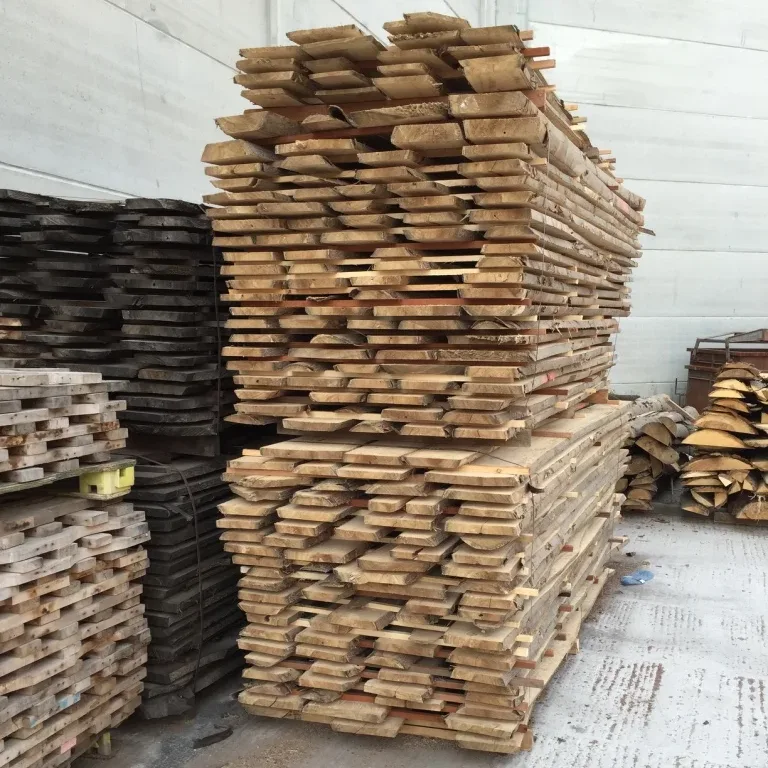
- Lab-tested wood. In 2013, the AIDIMA wood technology institute in Valencia tested logs from our first harvest (clone InVitro 112®) to Spanish UNE standards. The results: 237 kg/m³ at 12.5 % moisture, rated “very light”, with “small shrinkage” and “not nervous”, meaning it stays stable.
- A university study in our field. In 2007–2008, a forestry engineering study at the Universitat Politècnica de València, run with TRAGSA, followed paulownia growing on our plantation in Villar del Arzobispo. Our trees grew normally with no irrigation through the Mediterranean summer.
- From planting to boards in four years. Trees we planted in 2009 were harvested in early 2013, already 42 cm across at the stump, and turned into surfboards.
Why Paulownia Gets Heavier, and Stronger, with Age
Those early tests were done on very young trees, and that matters. Here is something twenty years in the field taught us:
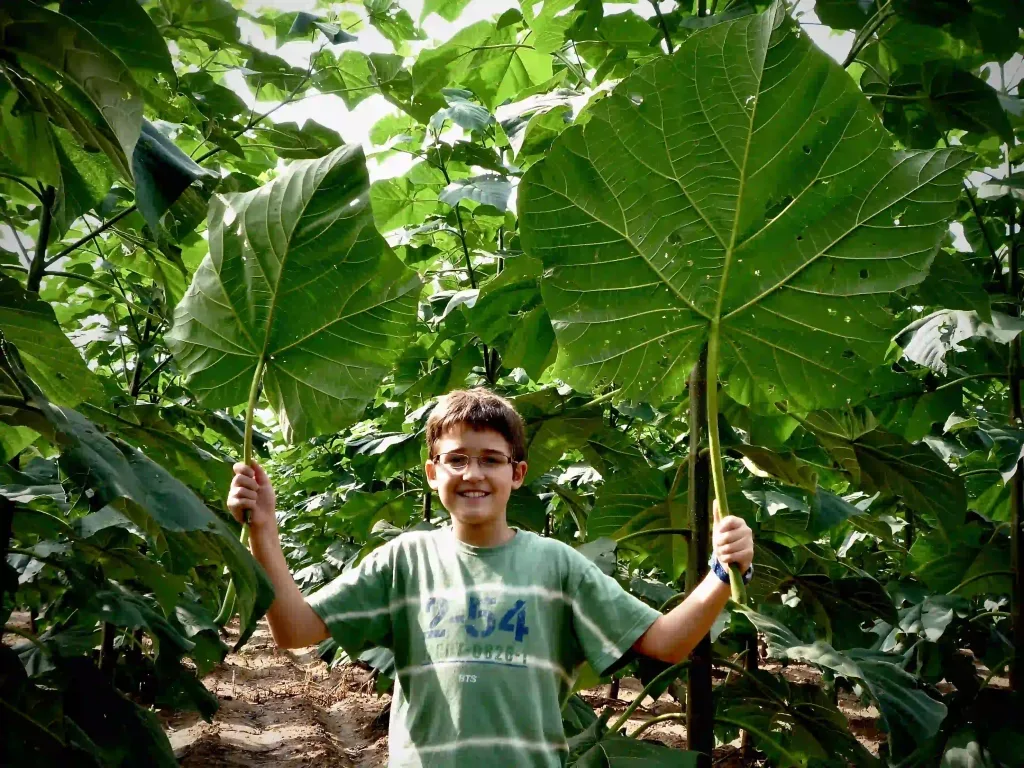
- Young trees race upwards. A young paulownia can grow up to 4 m in just 6 or 7 months. To carry that, it builds a wide trunk with a hollow, cane-like centre and very wide growth rings. That first wood is soft and, once dry, extremely light.
- Then the tree settles. Once it stops shooting up, it starts thickening its trunk instead. The growth rings come closer together, and the wood gets denser and stronger every year.
The type of tree matters too:
- Hybrid clones (like ours, and most of what is planted in Spain and across Europe) grow fastest and come out at around 260–280 kg/m³, depending on the age of the tree.
- Paulownia tomentosa, the slower-growing classic species, gives denser wood at around 300 kg/m³.
So two paulownia boards can weigh quite differently depending on the tree’s type, its age and how much water it got. That is why we know exactly which trees our wood comes from.
Balsa: The Old Legend
Balsa built surfing’s golden age and it is still lovely to shape. It is lighter than paulownia, but it is soft: it dents under your heels and needs a glass shell to survive. It is also grown far away, mostly in Ecuador.
Foam: Light, but No Soul
Foam is light and cheap, and it is great for mass production. But it has no strength of its own. It relies on fibreglass and resin to hold together, the ride feels the same board after board, and a ding lets water in.
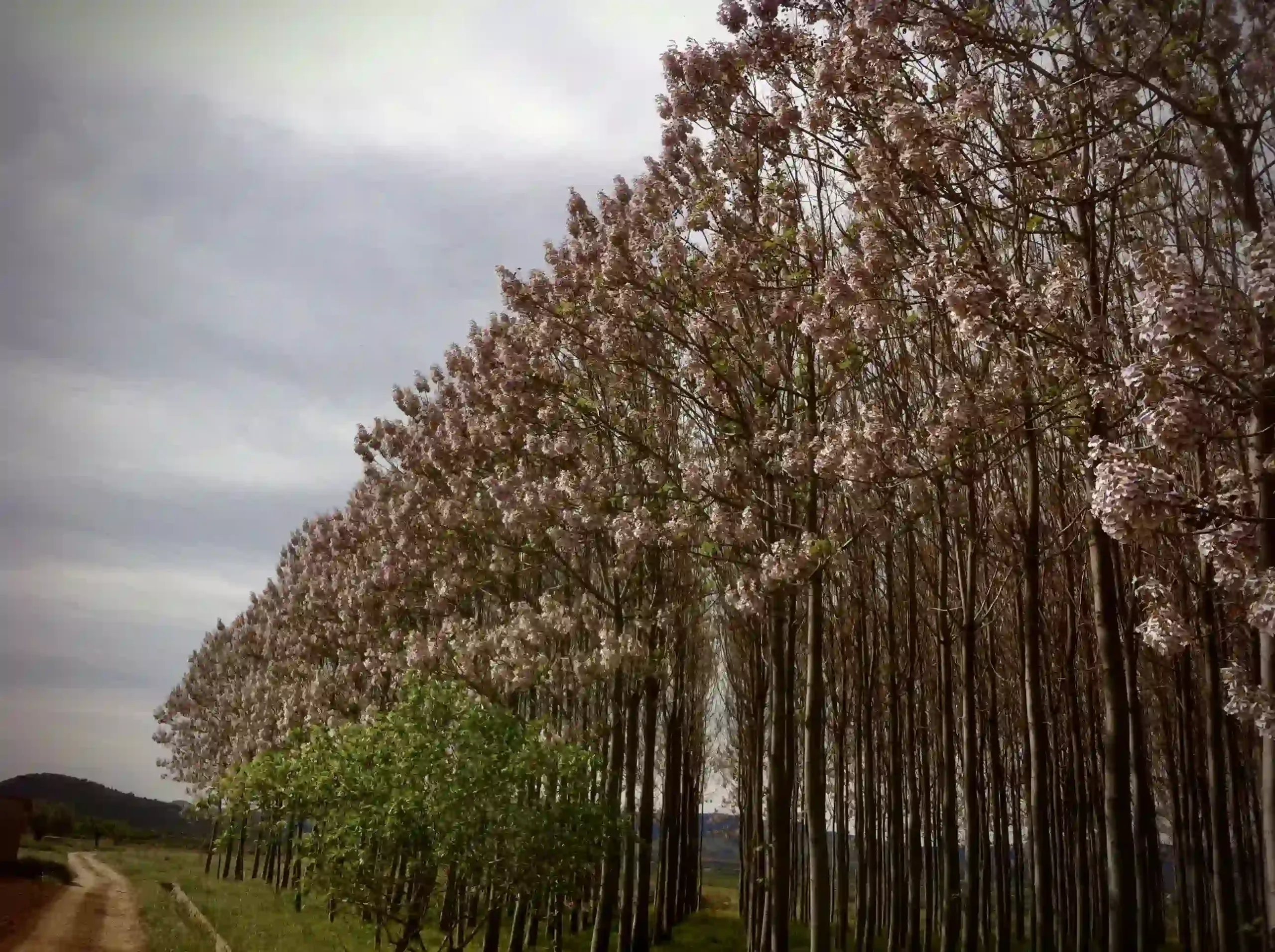
Is Paulownia Sustainable? Here Is What Happens in Our Field
Yes, and here is what that means in practice.
- Fast-growing. Up to 4 m in its first growing season, and a harvestable trunk in a few years on our land. Fast growth means it pulls carbon from the air quickly, and it is ready in years, not decades.
- It grows back by itself. After we harvest a tree, a new shoot grows from the same stump the next spring. One tree gives 3 to 5 harvests without replanting.
- No ploughing, little water. Because we never replant, the soil stays as it is. And as the university study showed, the trees grow without irrigation.
- A known, non-invasive tree. Our trees are the InVitro 112® clone, a sterile hybrid (Paulownia elongata × fortunei) that its nursery reports does not spread on its own.
- Short trip. Our three plantations (about 5 ha) are a short drive from the workshop. The wood goes from field to sawmill to drying to your blank, all in Valencia.
- We look after the land. A part of every sale goes back into the care of our trees.
That is the whole story, with nothing hidden: we grow it, we dry it, we shape it.
Caring for a Paulownia Board
- Rinse it with fresh water after a session.
- Keep it out of a hot car.
- On an oiled board, add a coat of oil when the wood looks dry.
- On a glassed board, fix dings early.
Ready to Build?
Tell us what you’re shaping (alaia, tiki, paipo, kiteboard or skins) and we’ll send you a quote.
